
Case Study
Hydraulic Fatigue Testing Actuator
Flowtech were asked by Safran Aerospace to deliver a workable solution for a Hydraulic Fatigue Testing Actuator, which would enable them to increase their test capability.
Summary
Location
Exeter
Industry
Aerospace Engineering
Product area
Large Bore Hydraulic Cylinders
Service area
Design, Manufacture & Test
Challenge
Safran challenged Flowtech to provide a bespoke design and manufacture of a large bore fatigue actuator within a tight timescale of 16 weeks, due to critical testing required soon after the delivery.
This involved upgrading their existing test rig to enable higher test load capacities. The cylinder interface was required to be a bespoke design to allow easy fitment to existing mounts.
We had to increase our own in-house manufacturing and assembly capabilities, to be able to safely handle and deliver this project.
In addition, with the exact specification agreed in-house with the customer, the team had to ensure that the project was delivered on time and within the agreed budget.
.png)
Concept
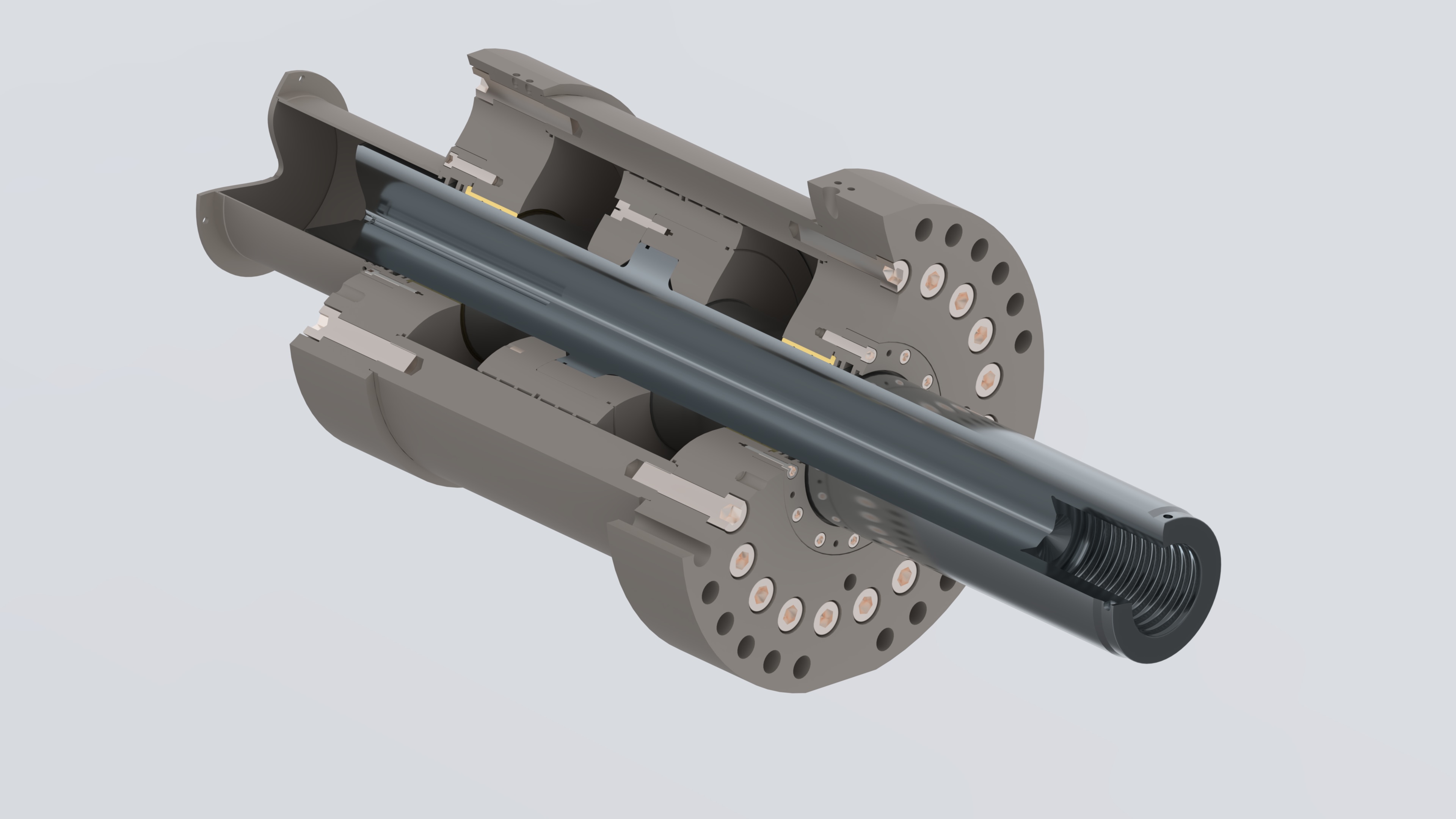
We decided to use a bolted construction large bore hydraulic cylinder, which, when completed, would weigh 5.2 tonnes with the ability to generate 550 tonnes of force.
The cylinder would act as the main actuator for the test rig. It was a bespoke cylinder with an inventive design for the piston and sealing arrangement, as use of a conventional sealing arrangement wasn’t possible. Additionally, the piston comprised of three bolted components to enable cost effective and timely manufacture.
We incorporated a linear transducer into the design so that the test rig can always monitor the position to within 1 micron.
Solution
The team from Safran visited our workshop in Exeter for an initial inspection of our manufacturing facility and review of concept design. With clear and concise communication, we were able to deliver the solution within the agreed turnaround of 16 weeks and agreed budget. The cylinder conformed to the pressure equipment directive.
.jfif)
.jfif)
Benefits
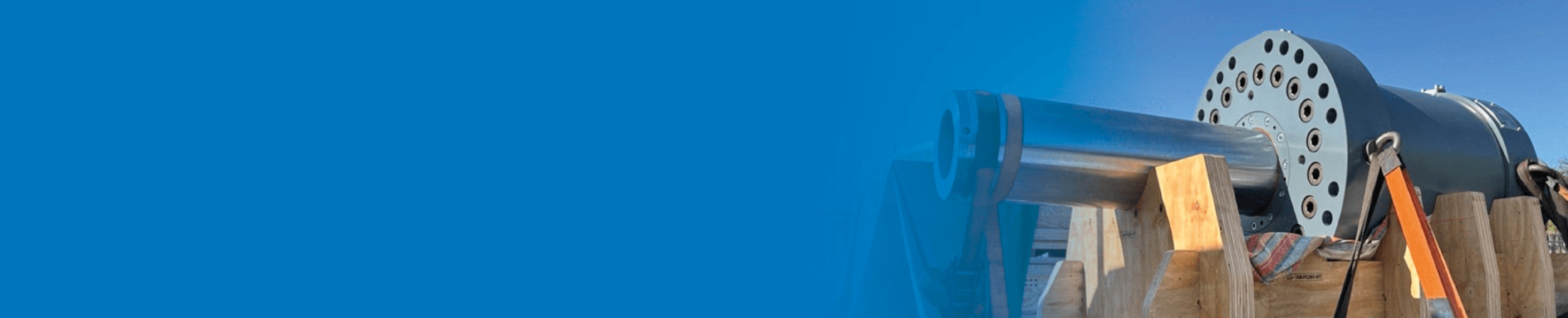
Upon completion, the cylinder was transported on a purpose-built cradle to the customer’s site in Gloucester for installation. The cradle also allowed safe handling at the customer facility.
Overall, the customer was very satisfied with how the project was managed and delivered. This upgrade has increased Safran’s capabilities in testing revolutionary composite aircraft components and widened their testing scope for the future.